Construction technology is the umbrella term for the software, hardware, and automated systems that construction teams use to plan, coordinate, and build more accurately than traditional methods alone allow. It spans everything from BIM software on a desktop to a robot printing layout on a slab. The ones that change a project most are the ones that change what actually happens in the field, not just the information behind it.
This article is for anyone trying to make sense of that landscape: project executives comparing categories before evaluating vendors, technology leads building a case for a new tool, and anyone who searched this term because “construction technology” gets used to mean a dozen different things depending on who’s saying it. It covers a working definition, the main categories in use today, and where automated layout specifically fits.
The Main Categories of Construction Technology
For practical purposes, most construction technology falls into six broad categories that show up on active jobsites today, spanning decades of maturity, from established administrative tools to emerging robotics and AI.
-
Construction Management Software
Construction management software handles the administrative side of a project: scheduling, budgeting, document control, and coordination between the office and the field. It’s often the first category a firm adopts, since it doesn’t require a coordinated 3D model to deliver value. Platforms like Procore and Autodesk Build are common examples, used to track schedules, budgets, and daily reports across the office and field.
-
Digital Design and Coordination Tools
Building Information Modeling, or BIM, is software that creates a coordinated 3D model of a building before anything gets built. It is the foundation many coordination and field-execution technologies build on, since a coordinated model is what a layout robot, a field app, or an analytics platform actually reads from. Autodesk Revit and Navisworks are common examples, used to build and clash-check these models before construction begins. The catch is that a coordinated model is only valuable if the field can build to it — and between coordination and installation, that information still has to be interpreted, measured, transferred, and physically marked.
-
Robotics and Automation
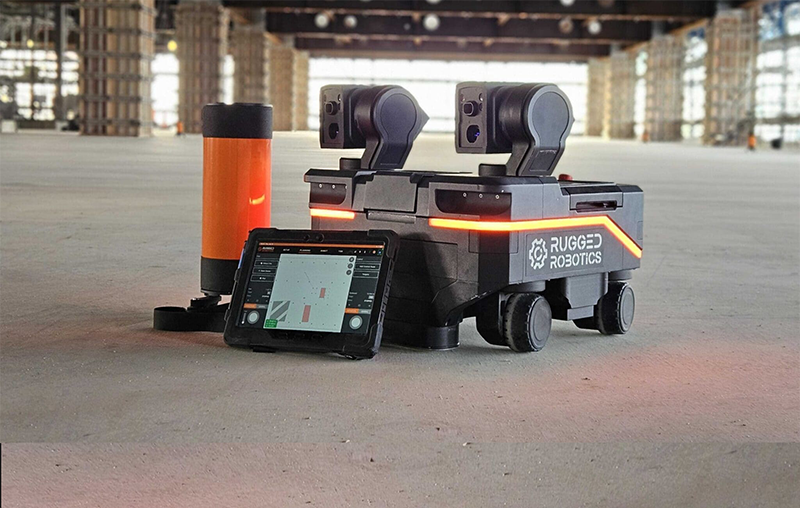
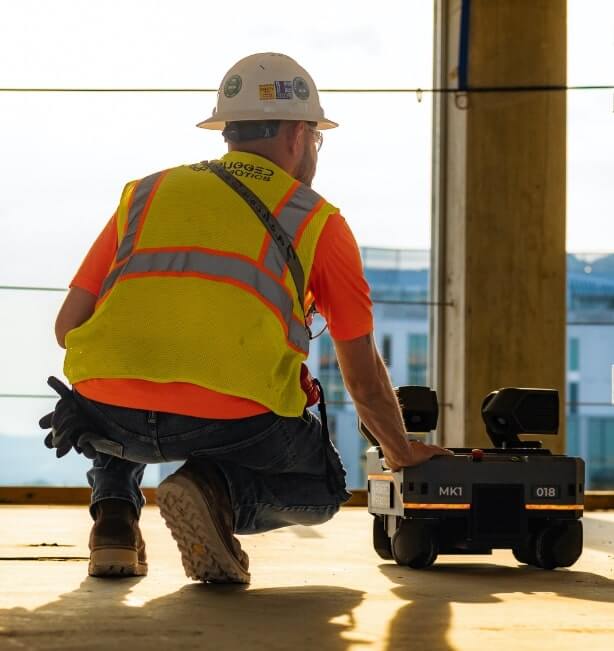
Robotics and automation covers physical machines that execute part of the construction process directly, rather than just planning or tracking it. A construction layout robot is a clear example: it reads a coordinated BIM or CAD model and prints layout information, such as lines, labels, and equipment outlines, directly onto the slab at the coordinates the model specifies.
-
Reality Capture and Digital Twins
Reality capture tools, like laser scanners and photogrammetry, record actual physical conditions on a jobsite. That data can feed a digital twin, a persistent virtual representation of a building that stays connected to its physical counterpart across design, construction, and sometimes operations. Laser scanners from Leica or NavVis, paired with a platform like Matterport, are common examples on active jobsites.
-
AI and Data Analytics
AI and analytics tools process project data to flag risk, predict delays, or summarize documents. Adoption here is moving quickly: a late-2025 Dodge Construction Network survey found 87% of contractors believe AI will meaningfully transform their business, even though actual adoption still trails that optimism. Tools like Buildots and Doxel are examples, using site photos to track field progress against the schedule automatically.
-
Supply Chain and Procurement Platforms
These tools manage material ordering, logistics, and vendor coordination digitally instead of through phone calls, spreadsheets, and paper purchase orders. Platforms like Kojo are common examples, managing material orders and vendor coordination digitally.
Why Construction Technology Adoption Is Accelerating Now?
Construction technology adoption is accelerating because labor is tighter, project data is more available, and the tools that use that data have gotten measurably better. None of those trends are new, but they are compounding. On labor alone, Construction Dive’s reporting on ABC workforce data puts the industry’s need at roughly 349,000 net new workers in 2026 to keep up with demand.
The investment numbers back this up. Construction Dive’s coverage of a Nymbl Ventures report found construction technology attracted $3.7 billion in venture capital through the first three quarters of 2025 alone, more than double the same period in 2024 and already ahead of full-year totals from each of the prior three years. Robotics and AI specifically pulled in 55% of all construction tech investment in early 2025, up from less than 30% the year before, per a separate Construction Dive report, a sign the categories closest to physical execution are pulling ahead. The National Institute of Building Sciences, a nonprofit chartered by Congress to advance building science, has similarly tracked growing interest in standardizing how digital tools connect to physical construction, a sign the category is maturing past early adopters.
Where Automated Layout Fits Within Construction Technology?
Automated layout sits at the point where digital coordination becomes physical construction. It lives inside the robotics and automation category, but it addresses a step most other construction technology cannot reach on its own: getting a coordinated digital model translated accurately onto the physical jobsite.
BIM, a digital twin, or an analytics platform can tell a team exactly what should get built and where. None of them physically mark that information on a slab. Traditionally that translation is manual: crews interpret drawings, establish control, measure locations, and mark the slab by hand, and every handoff is another chance for time and accuracy to get lost. Automated layout changes that workflow. A construction layout robot takes the same coordinated model other construction technology already relies on and prints it directly onto the floor, tied to the project’s verified site control network, typically within 2 to 3 millimeters of accuracy. Instead of just giving the field better information, it executes the step itself — extending the value of the coordinated model all the way into the field, rather than adding another digital layer on top of it.
Rugged Robotics provides this as a managed service — Layout-as-a-Service — with its own operators running the robot on-site. The system earned the company the 2025 IEEE Robotics and Automation Award for Product Innovation.
Construction Technology Categories at a Glance
| Category | What It Does | Example | Adoption Stage |
|---|---|---|---|
| Construction management software | Manages scheduling, budgeting, and administrative workflows. | Digital scheduling, budgeting, and document control platforms. | Mature, widely adopted. |
| Digital design & coordination (BIM) | Creates a coordinated 3D model before construction begins. | Federated architectural, structural, and MEP models. | Mature, widely adopted. |
| Supply chain & procurement | Manages materials and vendors digitally. | Digital purchase orders and logistics tracking. | Mature in larger firms. |
| Reality capture & digital twins | Records physical conditions and keeps a virtual model in sync. | Laser scanning tied to a digital twin. | Growing. |
| Robotics & automation | Physically executes part of construction directly. | Automated layout printing coordinated data onto the slab. | Growing, still early on most jobsites. |
| AI & data analytics | Processes project data to flag risk or predict delays. | Schedule risk prediction from project data. | Early, high interest. |
Within robotics and automation specifically, layout execution splits into two approaches: platforms built around an external robotic total station tracking a prism on the robot, and platforms using onboard localization tied to site control instead. For the full technical comparison, see Layout Robot vs. Robotic Total Station.
How to Evaluate Construction Technology for Your Project
How you evaluate construction technology should depend on how mature the category is, not a single universal checklist. Construction management software and BIM have been around for decades, with established procurement processes and clear ROI benchmarks. Robotics, reality capture, and AI are newer, with less standardized implementation and capabilities that are still changing fast, which changes what’s actually worth evaluating.
For mature categories like construction management software and BIM, the market has already settled on standard features and integration patterns. The real question is fit, not whether the technology works:
▪ Does it integrate with the tools your team already uses, or does it become another disconnected system to manage?
▪ Does the vendor have a track record on projects similar in size and complexity to yours?
For emerging categories like robotics, reality capture, and AI, best practices are still developing, so the bigger risk is buying capability the team isn’t ready to use well:
▪ Does this tool replace a manual, error-prone step, or just add a new dashboard on top of the same manual process?
▪ Does it require a coordinated digital model to work, and if so, is that model actually ready?
▪ Can the team pilot it on one project before committing at scale?
For teams already working from a coordinated BIM model, automated layout is often one of the more direct emerging categories to pilot, since it plugs into a workflow that likely already exists rather than requiring a new one.
Frequently Asked Questions
What’s the difference between construction technology and construction management software?
Construction management software is one category within construction technology, focused on scheduling, budgeting, and administrative workflows. Construction technology is the broader term that also includes BIM, robotics, reality capture, analytics, and supply chain and procurement platforms.
Is BIM considered construction technology?
Yes. BIM is typically treated as a foundational category of construction technology, since it creates the coordinated digital model that many other categories, including robotics and analytics tools, depend on to function.
What’s the ROI of adopting new construction technology?
ROI varies significantly by category and by how well the tool fits an existing workflow. It’s generally measured across labor savings, reduced rework, and schedule impact rather than the cost of the tool alone.
Do I need to adopt every category of construction technology at once?
No. Most teams adopt construction technology incrementally, starting with the category that addresses their most expensive manual bottleneck, rather than implementing every category at once.
Key Takeaways
- Construction technology spans everything from project management software to robotics, and the categories solve very different problems — with a coordinated BIM model acting as the foundation many coordination and field-execution technologies build on.
- The biggest opportunity is often at the handoffs — where coordinated information still has to be interpreted and executed manually in the field.
- Automated layout fills a specific gap: physically translating a coordinated model onto the jobsite, typically within 2–3 mm of the site control network.
- For teams evaluating new technology, the real question isn’t how advanced a tool looks. It’s whether it removes a real bottleneck, reduces rework, or makes the work easier to execute consistently.
Curious where automated layout could fit into your technology stack? Start a pilot project and see it running on your own jobsite.